What Home Improvements Require Building Regulations?
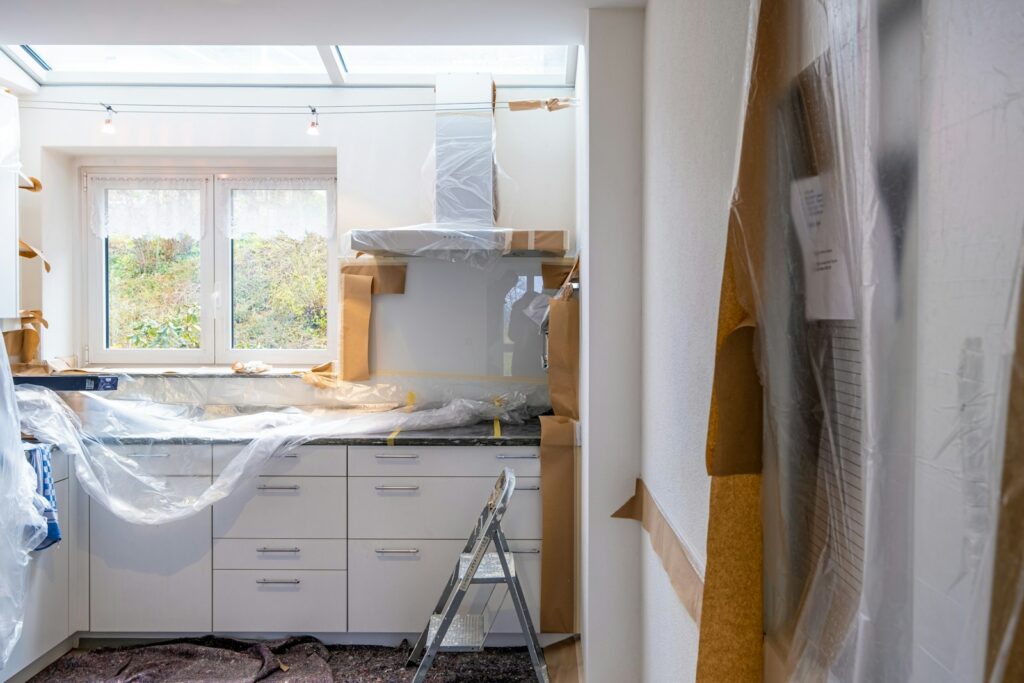
Home improvements and renovations are – and I’m sorry to be the one to break this to you – never-ending tasks. From the first day you get the keys to your first home to your retirement years in your forever home, you’ll be waging a constant war against household jobs both little and large, all in pursuit of the ideal living environment.
This Sisyphean struggle isn’t all bad though, as what you get out of it is an ever-evolving house that continually reflects both your tastes and your needs, all which accruing more and more monetary value. Every improvement is worth the investment; it’s just that some can take a little more investment than others. For instance, there are many household renovations that require more than parts and labour to get over the finish line.
Some jobs are uniquely beholden to building regulations, and without the right foreknowledge can be difficult or even dangerous to complete. Here, we’ll look at some of the common culprits for regulatory difficulty, and just how much risk those difficulties pose to your plans.
Regulation-Free Works
Before we begin, though, let’s acknowledge that there are a great many home improvements you can undertake that require no regulatory compliance at all. For instance, if you’re intending to give yourself a new gravel driveway or patio, you need little more than a complement of bulk gravel bags to realise your vision; likewise, knocking through stud walls to open up your living spaces might seem wantonly destructive, but can be safely done without a thought – provided the walls aren’t load-bearing, of course.
Loft Conversions
Loft conversions are a fun one, having somewhat recently become exempt from planning permission (as long as the conversion doesn’t exceed the existing boundaries of the property, height included). However, this doesn’t mean they’re exempt from building regulation, by any stretch; indeed, there are strict standards for new stairs, which must be adhered to in design and construction in order to reduce the risk of injury in use.
Extensions
Extensions have also been slightly deregulated of late, with respect to planning permission – but nonetheless retain heavy regulation in terms of structural design and insulation. There are many different brackets for consideration here, but the most important relate to the construction of external walls, the compliant installation of new doors and windows, and the installation of domestic electrics.
Electrical Work
Electrical installation deserves its own sub-section here, on account of the serious risk that mains electricity poses to you as a homeowner. Electrical work should never be DIYed, and is beholden to strict regulation for especially good reason. Kitchens and bathrooms are particularly dangerous on account of the presence of plumbing, and the potential for a humid environment. Trained electricians should be the only people to touch your wiring, and will ensure that your electrics always meet the requirements of Approval Document P.