UK Construction and Design Pros Save Over Three Hours a Week With AI, Houzz Report Finds
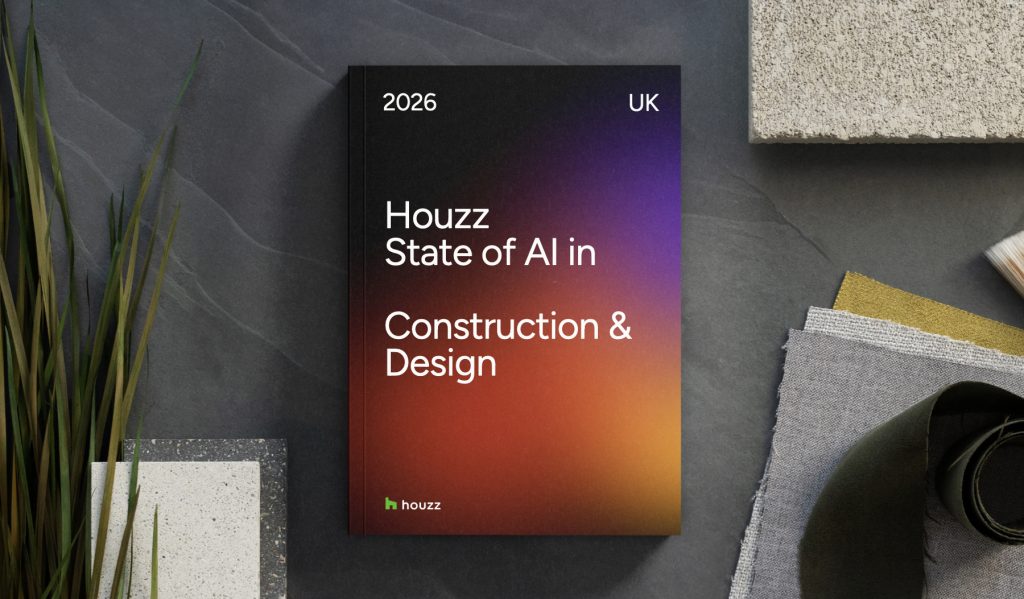
Nearly half of UK construction and design professionals are already using AI in their businesses, according to a new report from Houzz, with early adopters reporting measurable time savings and productivity gains.
The inaugural 2026 UK Houzz State of AI in Construction and Design Report surveyed more than 145 construction and design professionals to understand how the sector is responding to the fast-moving AI landscape. The findings point to broad awareness, growing adoption and strong expectations for AI’s role in the industry, while also highlighting ongoing concerns around accuracy, data security and training.
According to the report, 46% of professionals are already using AI in their businesses. Those early adopters report saving an average of more than three hours per week, citing benefits such as improved productivity, reduced manual effort and better organisation. Houzz estimates that this equates to more than £23,000 in annual productivity gains per business.
The research also suggests that AI is quickly becoming a strategic priority for the sector. Three in five respondents believe AI will transform the industry within the next five years, while awareness of the technology is already high, with 72% of professionals saying they are familiar with AI. A further 72% report being familiar with AI tools specifically designed for construction and design workflows.
“AI innovation in construction and design is accelerating, creating a competitive advantage for pros who adopt it,” said Alon Cohen, Houzz co-founder and CEO. “As the report shows, pros in our industry are approaching this era with openness and a strong desire to learn. The future is about adopting AI to build stronger, more successful businesses. At Houzz, this vision has guided our work: delivering powerful AI capabilities in Houzz Pro software to boost productivity across every phase of a project and client relationship.”
Admin tasks lead AI adoption
The report found that AI is currently being used most widely for administrative work, with 79% of all professionals using AI saying they apply it to tasks such as note-taking, formatting and document editing. This rises to 89% among construction professionals and 88% among design professionals.
Sales and marketing is another significant area of adoption, with 52% of AI users applying the technology to activities such as social media content, advertising and lead management. Construction professionals are particularly likely to be using AI in this area, at 67%, compared with 48% of design professionals.
AI is also starting to support more industry-specific workflows. A third of professionals using AI are applying it to planning and design tasks, including visualising projects, generating floor plans and supporting takeoffs. Meanwhile, 31% are using AI for project and client management, such as estimating, invoicing and task tracking. A further 21% are applying AI to business operations and reporting, including paperwork, expense tracking, financial reporting and performance tracking.
Satisfaction is high, but barriers remain
Among professionals already using AI, satisfaction levels are relatively strong. Nearly two-thirds of AI users, 61%, say they are satisfied with their experience, while 60% say AI has had a moderate to significant impact on their workflow.
However, the report also highlights several barriers that could slow wider adoption. Professionals continue to raise concerns about the reliability and accuracy of AI-generated outputs, as well as data security and privacy risks. A lack of adequate training and technical expertise is also seen as a challenge.
Andrea Yorston of Andrea Yorston Interior Design said: “We know AI could save us time, but most tools require a level of training and experimentation that just isn’t realistic when you’re running projects day to day. What makes the biggest difference is when those capabilities are built into the tools we already use, so you can start benefiting from them straight away.”
This training gap points to a growing opportunity for technology providers to integrate AI into existing platforms and workflows, rather than expecting professionals to adopt standalone tools. Houzz says its Houzz Pro software embeds AI across areas including estimates, takeoffs, visualisation, project management and design tools, helping professionals incorporate AI into their daily work more naturally.
The report suggests that while AI adoption in construction and design is still developing, professionals are increasingly open to tools that can reduce admin, improve efficiency and support better project delivery. As firms continue to face pressure around time, cost and client expectations, AI is likely to play a growing role in how residential construction and design businesses operate.